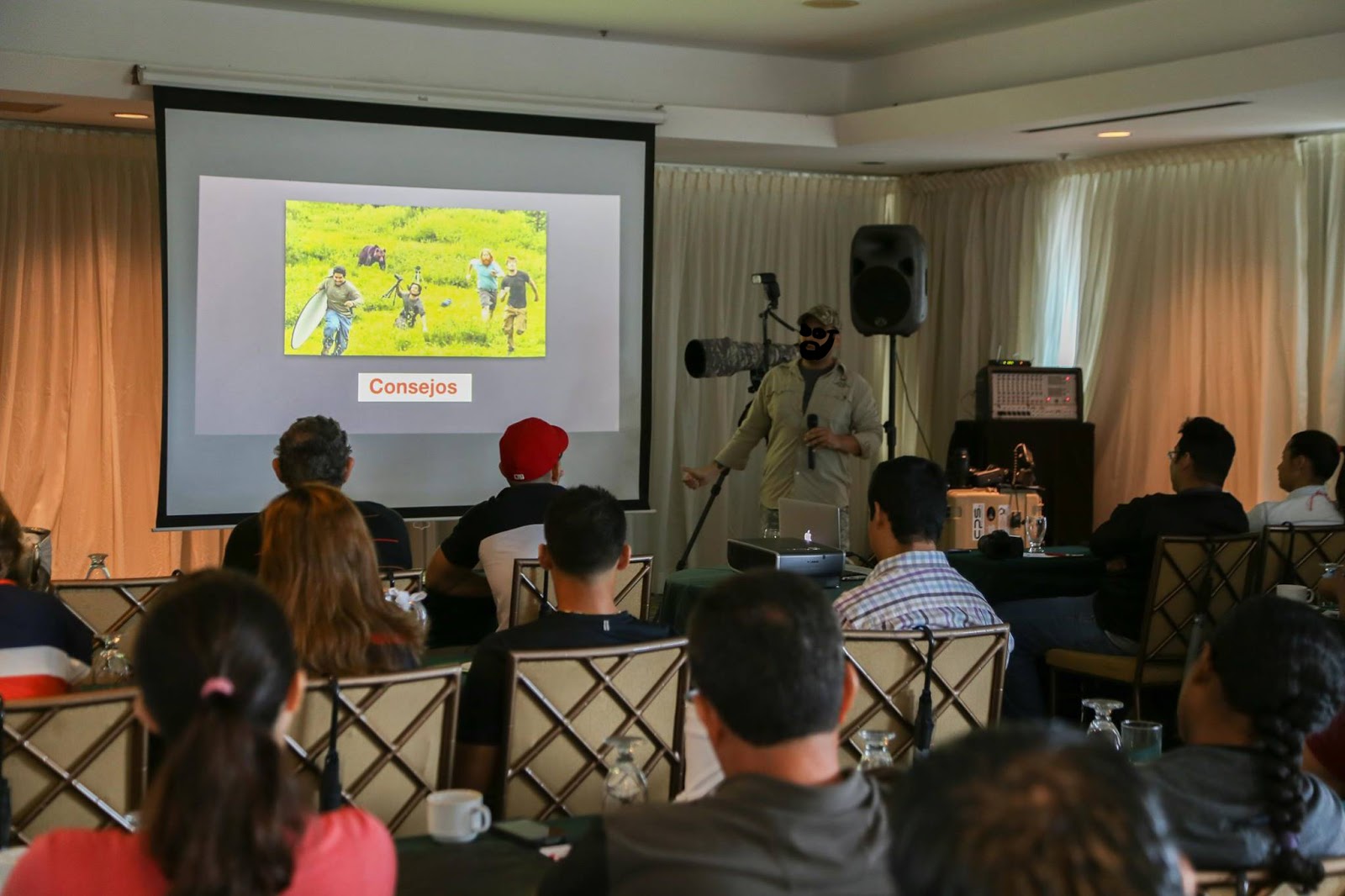
On April 22, 2017 we conducted our first wildlife photography workshop thanks to Canon Panamá, who organized the workshop as part of their continuing support to photography enthusiasts, and our mutual interest to share knowledge and photography tips. The workshop was imparted by Miguel “Siu”.
Wildlife photography is a very broad subject-matter. Therefore, the real challenge was to cover as much subjects as possible on a limited amount of time. The general objectives of the workshop were:
- To know the different techniques used by professional photographers to obtain sharper images of animals in the wild.
- To know what equipment and accessories are needed and what the results are with each one.
During six hours we shared our knowledge in Gamboa Rainforest Resort where firstly we covered two hours of theory, explaining basic concepts, and showing which gear is required. We gave tips to make pictures with good results in natural environments, we taught the techniques to achieve sharper images and how to look for the best photographs, including how to use speedlites. Answering all the participants' questions.
Then, we explained certain adjustments in camera, so the participants could experiment on their cameras how to set out them. Including: general settings for wildlife, birds in flight setting and macro photography setting.
After lunch we practiced the learned techniques for one and a half hour, and participants were able to test gear, especially telephoto and super-telephot lenses with the support of Canon specialists. During this period participants were able to discuss their photos with the instructor for comments and recommendations to improve them.
As instructor, Siu did’t got the chance to make so much photos, but bellow are some of the subjects participants were able to shoot:
 |
| Green Iguana (Iguana iguana) |
 |
| Southern Lapwing (Vanellus chilensis) |
 |
| Southern Lapwing (Vanellus chilensis) |
We stayed in Gamboa, and the following day were able to capture these ones:
 |
Blue-gray Tanager (Thraupis episcopus)
|
 |
| Osprey (Pandion haliaetus) eating a fish |




This is a wonderful post about your first wildlife photography workshop. Experiences like this are incredibly valuable for photographers who want to learn how to observe animals, understand natural light, and improve their composition in real environments. Wildlife workshops not only teach camera settings and technical skills but also help participants develop patience and respect for nature. In many professional workshops, photographers learn techniques such as choosing the right lenses, framing wildlife effectively, and understanding animal behavior in the field. :contentReference[oaicite:0]{index=0} It’s inspiring to see communities coming together to share knowledge and passion for wildlife photography. For those who enjoy exploring the work of talented photographers in this field, this article on 15 Famous Wildlife Photographers highlights several inspiring artists whose images capture the beauty of nature.
ReplyDelete